
How Website Design Matters for Getting Better Results in Marketing
Imagine clicking an advertisement for an online store and landing on a website that takes too long to load, looks confusing, or doesn’t work properly on your phone. Would you continue shopping?
Probably not.
This simple example explains why website design and marketing need to work together. Marketing can bring people to your website, but the website experience often influences what they do next.
For e-commerce businesses especially, a well-planned website isn’t simply an online catalogue. It can help build trust, communicate value, guide visitors, and turn interest into action.
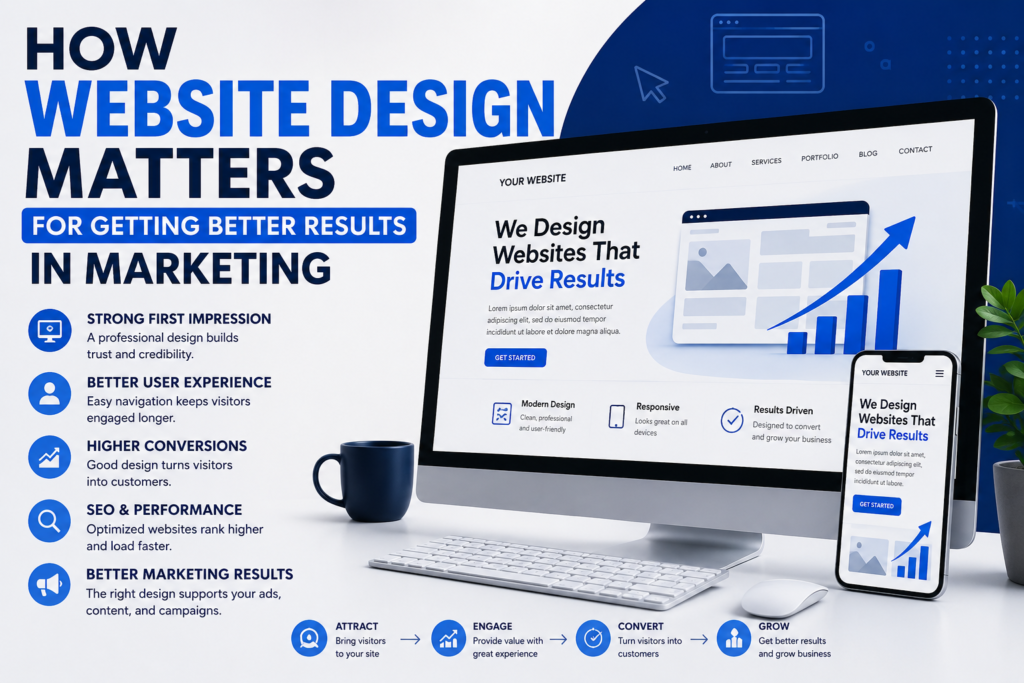
Why Website Design Matters in Marketing
Marketing campaigns such as Google Ads, Meta Ads, SEO, and social media are designed to attract visitors. But getting traffic is only one part of the process.
When someone arrives on your website, they immediately start forming an impression based on its appearance, structure, content, navigation, and usability.
Good website design helps visitors quickly understand:
- What your business offers
- Why your products or services matter
- Where they should go next
- How they can contact you or make a purchase
If these things aren’t clear, even a well-planned marketing campaign can struggle to deliver the expected results.
1. Build Trust Before Asking for a Sale
People are naturally cautious when purchasing from an unfamiliar business online.
Your website can reduce that uncertainty by presenting information clearly and professionally. Consistent branding, easy navigation, clear product information, visible contact details, and a clean layout can make the business feel more credible.
For an e-commerce website, trust can be particularly important because customers may need to share personal and payment information.
The goal isn’t to make a website look expensive for the sake of appearance. The goal is to make visitors feel that they are dealing with a legitimate and organized business.
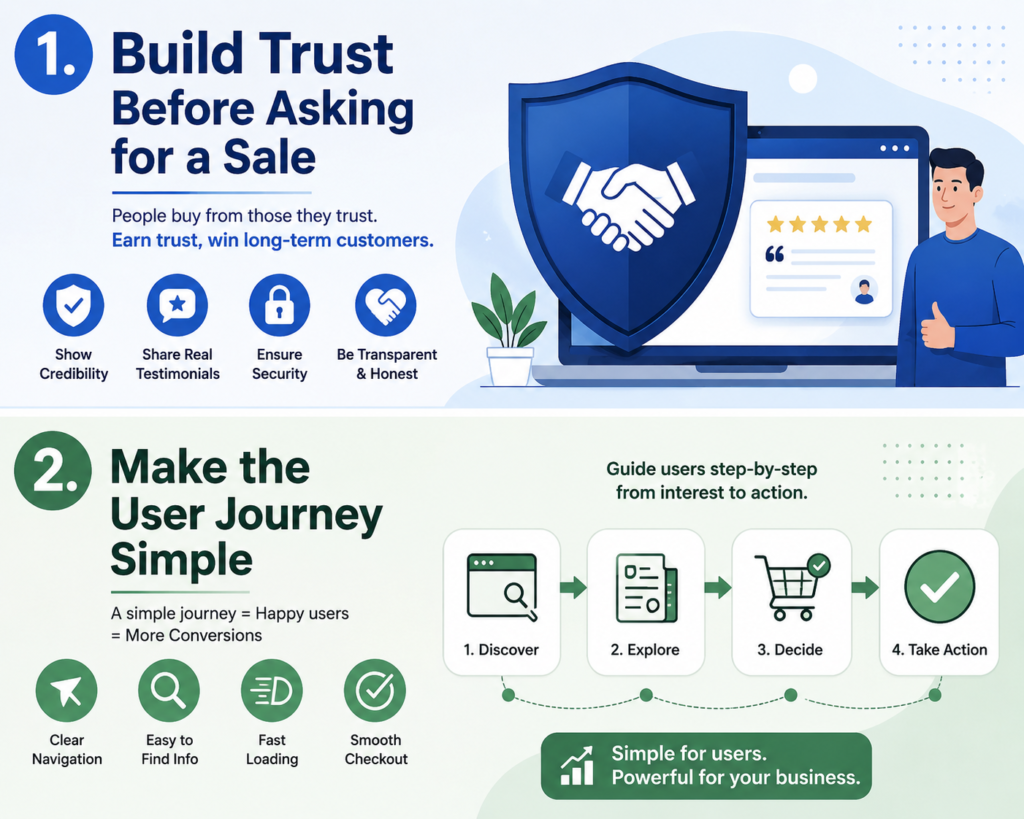
2. Make the User Journey Simple
A visitor shouldn’t have to work hard to find a product, understand an offer, or complete an action.
This is where UX design becomes important.
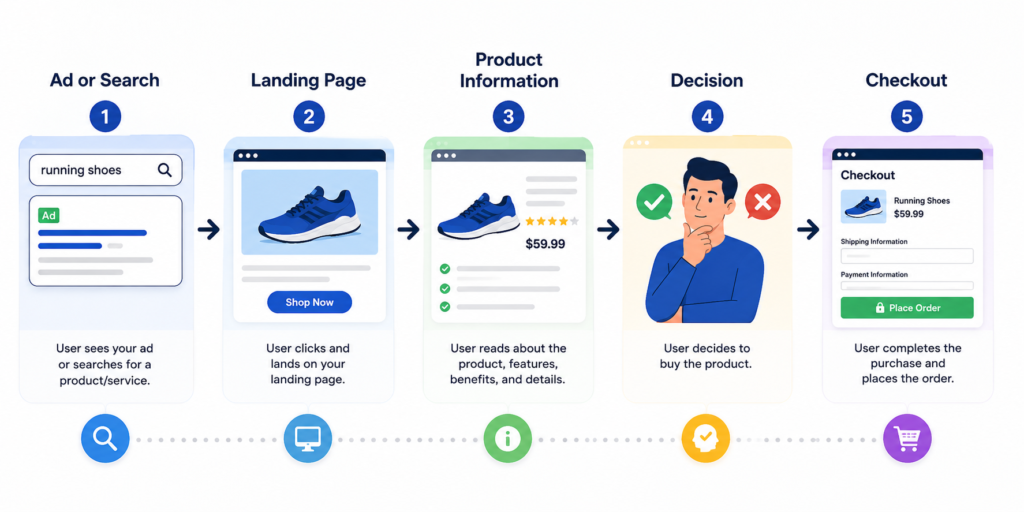
Think about the journey from a marketing campaign to purchase:
Ad or Search → Landing Page → Product Information → Decision → Checkout
Every step should feel connected.
For example, if an advertisement promotes a specific product but sends users to a generic homepage, visitors may have to search for the product themselves. A dedicated landing page can create a more direct experience.
While working with WordPress, Elementor, landing pages, SEO research, and digital marketing projects, I focus on this connection between what attracts the visitor and what the website asks them to do next.
3. Responsive Web Design Is Essential
Many customers browse online using smartphones. That’s why responsive web design should be considered from the beginning rather than treated as an optional feature.
A responsive website adjusts its layout to different screen sizes. Text should remain readable, buttons should be easy to tap, images should display correctly, and important information shouldn’t disappear on smaller screens.
Imagine finding an attractive product through social media but discovering that the checkout page is difficult to use on your phone. That friction can make the visitor leave.
Good mobile design removes unnecessary obstacles and makes the experience more comfortable.
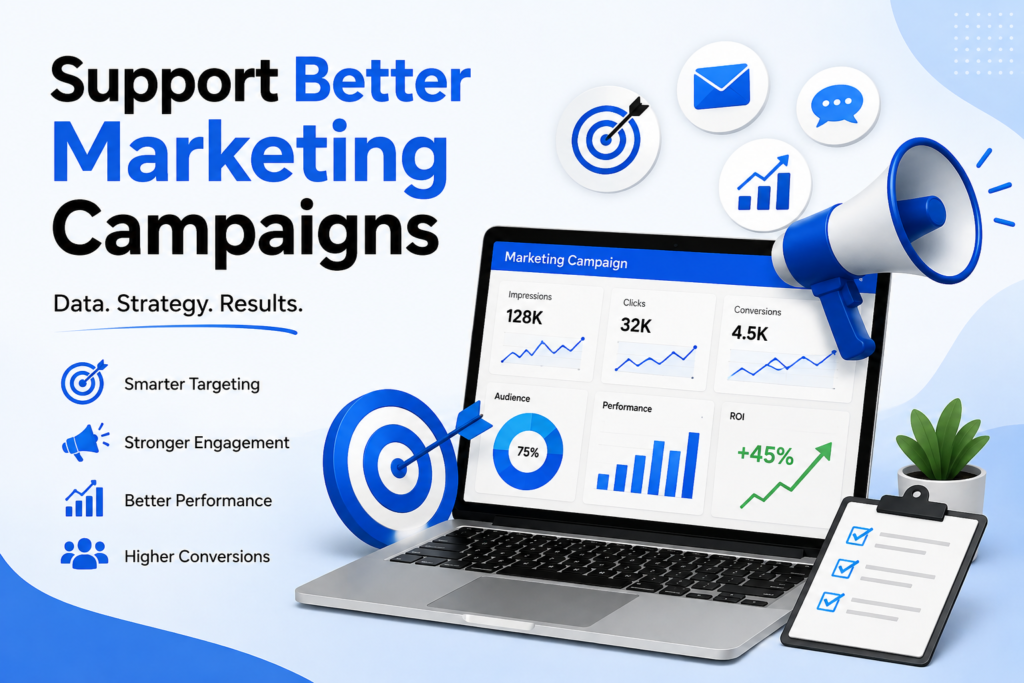
4. Support Better Marketing Campaigns
Your website is often the destination for traffic generated through marketing.
For example:
- Google Ads can send users to targeted landing pages.
- Meta Ads can introduce products to potential customers.
- SEO can bring visitors searching for relevant information.
- Email and social media can direct existing audiences back to your website.
This means web design shouldn’t be developed separately from marketing strategy.
The message in the advertisement should match the message on the landing page. The product shown in a campaign should be easy to find. The call to action should be obvious.
This consistency can create a smoother customer experience.
- Content organization
5. Improve Website Optimization
A beautiful website isn’t automatically an effective website.
Website optimization involves looking at how easily visitors can use the site and complete important actions.
Pay attention to areas such as:
- Page structure
- Navigation
- Calls to action
- Mobile usability
- Landing-page clarity
- Product information
- Forms and checkout flow
- Content organization
You can also use analytics and other available data to identify where users may be dropping out of the journey.
The important point is to improve based on actual user needs rather than changing elements simply because they look different.
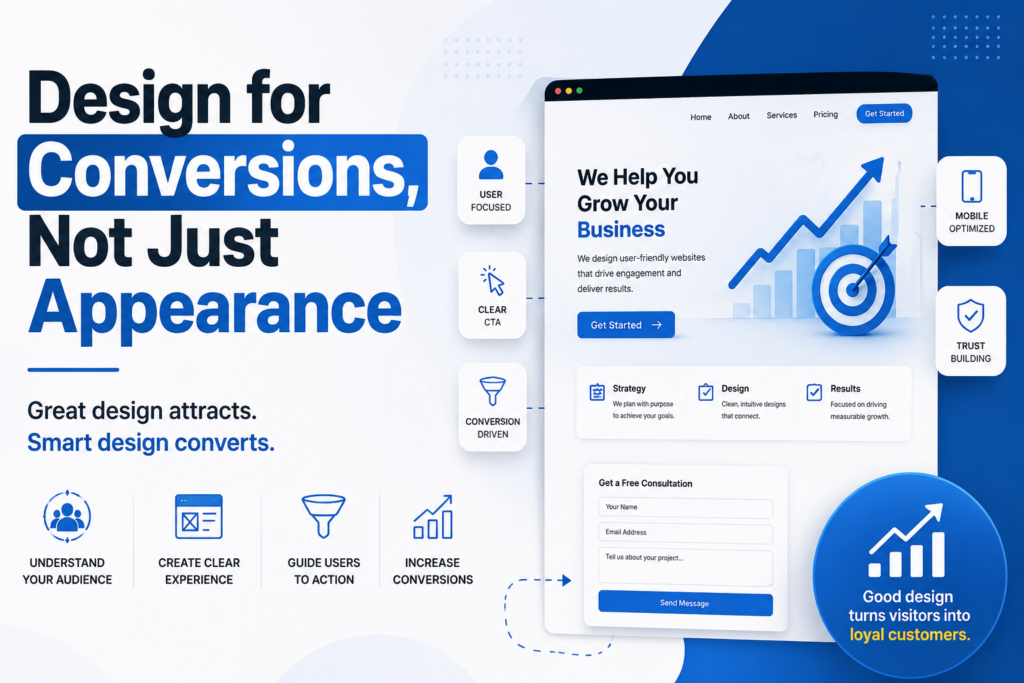
6. Design for Conversions, Not Just Appearance
One common mistake in e-commerce is treating design as decoration.
A marketing-focused website should have a purpose behind each important element.
A product page, for example, may need a clear product title, useful description, relevant images, pricing information, important details, and an obvious purchase action.
Similarly, a service page might need a strong explanation of the service, supporting information, trust elements, and a straightforward inquiry option.
This is where landing-page optimization and conversion-focused design become valuable.
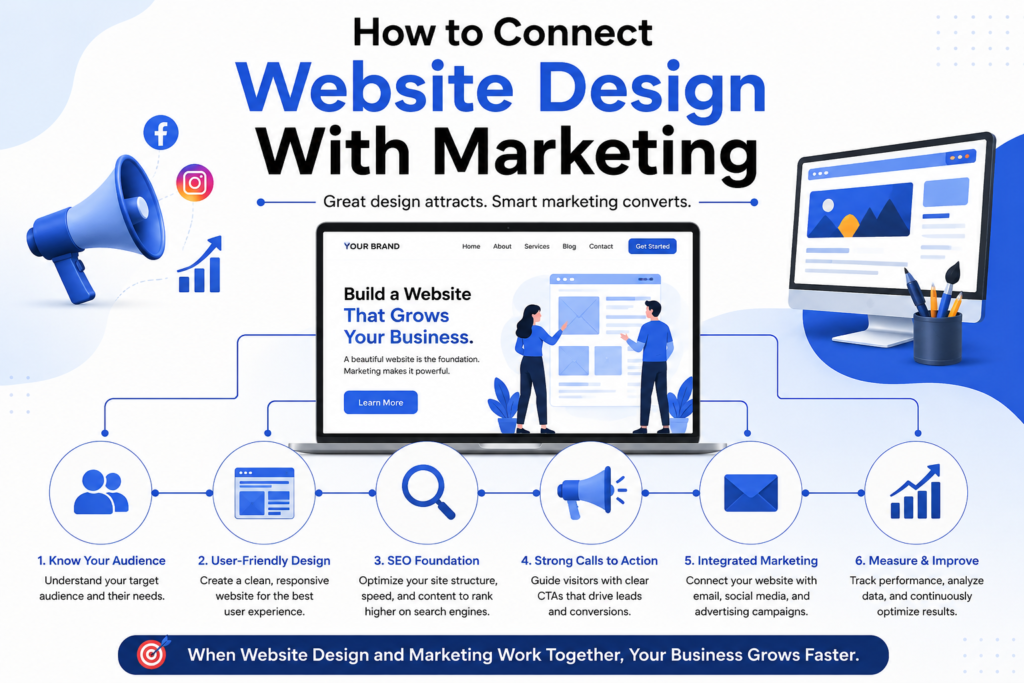
How to Connect Website Design With Marketing
Before launching a marketing campaign, ask a few practical questions:
- Does the landing page match the campaign message?
- Can visitors understand the offer quickly?
- Is the website easy to use on mobile?
- Are important calls to action visible?
- Can customers easily find product or service information?
- Is the path to purchase or inquiry simple?
If the answer to several of these questions is no, improving the website may be more useful than simply increasing advertising spend.
Final Thoughts
Website design and marketing shouldn’t be treated as two completely separate activities.
Marketing brings attention. Your website handles much of the experience that follows.
For an e-commerce business, effective website design can help communicate value, establish credibility, simplify navigation, support responsive experiences, and create a clearer path toward conversion.
My approach to web design combines practical work with WordPress and Elementor, SEO research, UX thinking, landing-page optimization, and digital marketing principles. The objective isn’t to make a website look good alone; it’s to make the website useful for both visitors and the business.
A strong marketing strategy deserves a website that is ready to support it.
FAQ
1. Why is website design important for marketing?
Website design affects how visitors understand, navigate, and interact with a business after arriving from search engines, advertisements, social media, or other marketing channels.
2. What is responsive web design?
Responsive web design allows a website’s layout and content to adapt to different screen sizes, including smartphones, tablets, and desktops.
3. Can good web design improve e-commerce performance?
Good web design can create a clearer shopping journey, improve usability, communicate product information effectively, and make purchasing easier.
4. How does UX design help marketing?
UX design focuses on making the visitor’s journey easier and more intuitive. This can help remove unnecessary friction between arriving on a website and completing an intended action.
5. Should website design be completed before running ads?
Ideally, the website or relevant landing page should be prepared and tested before sending significant marketing traffic to it. Otherwise, advertising may bring visitors to an experience that isn’t ready to convert