
A Complete Guide to Growing Your Business Online
Growing a business online is no longer simply about having a website or posting regularly on social media. You need a strategy that connects visibility, advertising, landing pages, tracking, and optimization
Two of the most useful advertising platforms for this are Facebook and Google. While they work differently, using them together can help businesses reach potential customers at different stages of their buying journey.
Google can help you reach people actively searching for a product or service, while Facebook can help introduce your business to people based on their interests, behavior, and demographics.
The real opportunity comes from combining both platforms with a well-designed website, effective landing pages, and accurate conversion tracking.
How Facebook and Google Advertising Work Together
Facebook and Google advertising should not necessarily be treated as competing channels.
They often serve different purposes
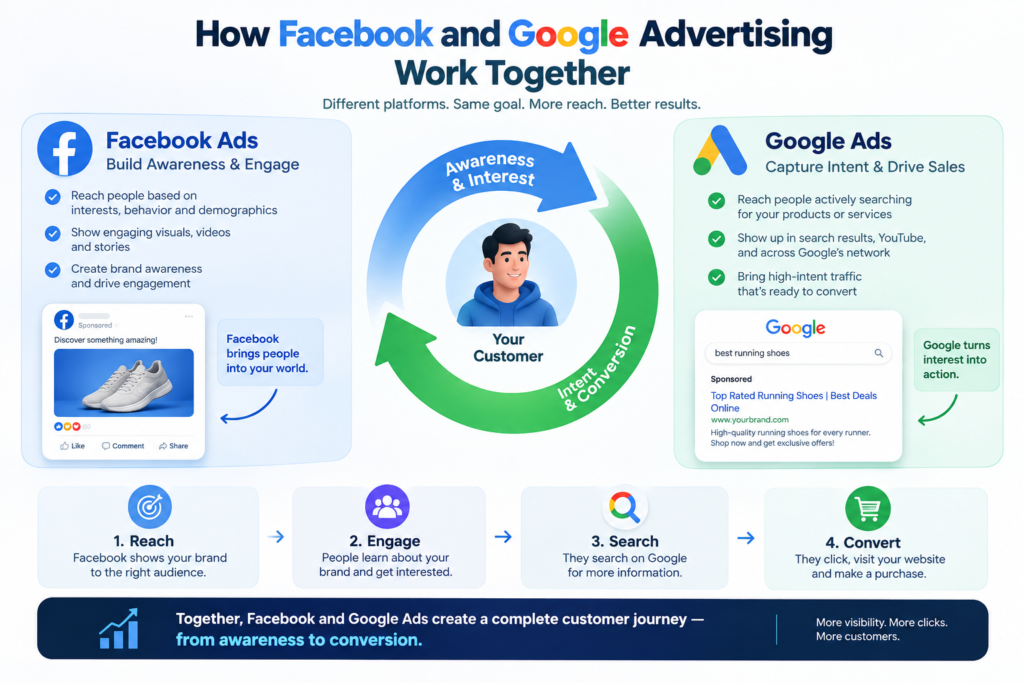
Google Ads can capture existing demand. For example, someone searching for “website designer near me” already has a potential need. Search ads can place your business in front of that person at the right moment.
Facebook advertising, through Meta’s advertising ecosystem, can help create awareness and reach audiences who may not be actively searching yet.
A simple customer journey could look like this:
- A person discovers your business through Facebook.
- They visit your website and learn about your services.
- Later, they search for your service on Google.
- Your Google Ads campaign appears.
- They visit your landing page and submit an inquiry.
- Conversion tracking records the result.
This combination can create a more connected marketing journey.
Build the Foundation Before Running Ads
Advertising can bring visitors to your website, but it can’t automatically fix a poor user experience.
Before investing heavily in PPC advertising, review your website
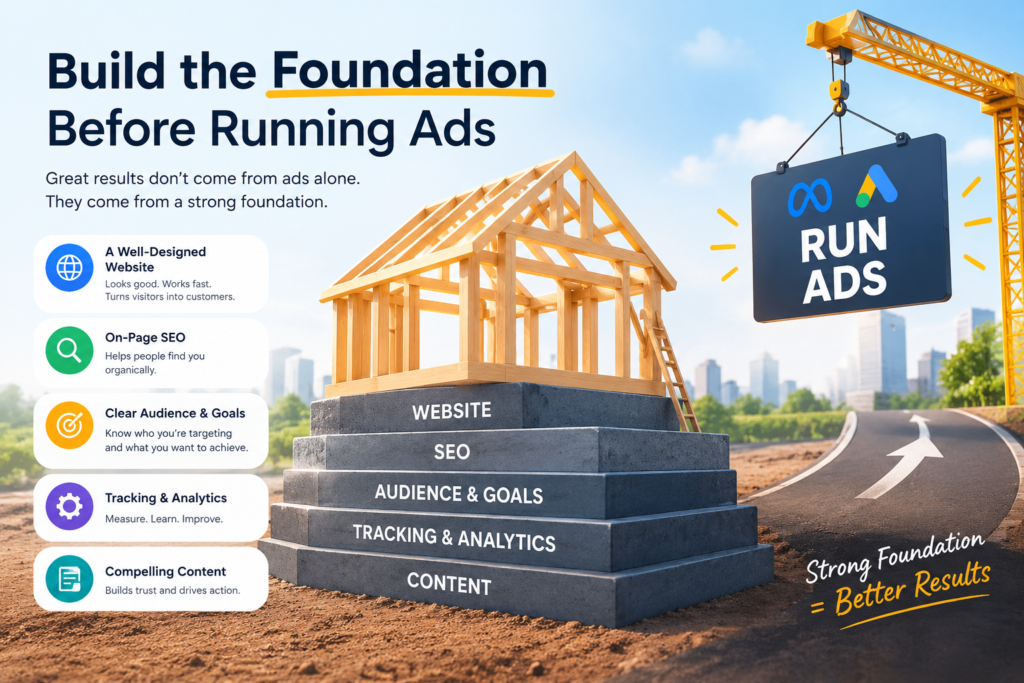
Your website should have:
- Clear service or product information
- Fast and mobile-friendly pages
- Strong calls to action
- Simple navigation
- Trust-building information
- Relevant landing pages
- Easy-to-complete inquiry or purchase forms
For example, if you’re advertising web design, sending every visitor to your homepage may not be ideal. A dedicated landing page focused specifically on web design can provide a clearer message and a more relevant next step.
This is where landing-page optimization becomes important.
Create Goal-Focused Google Ads Campaigns
Google Ads campaigns should be built around specific business objectives rather than simply generating clicks.
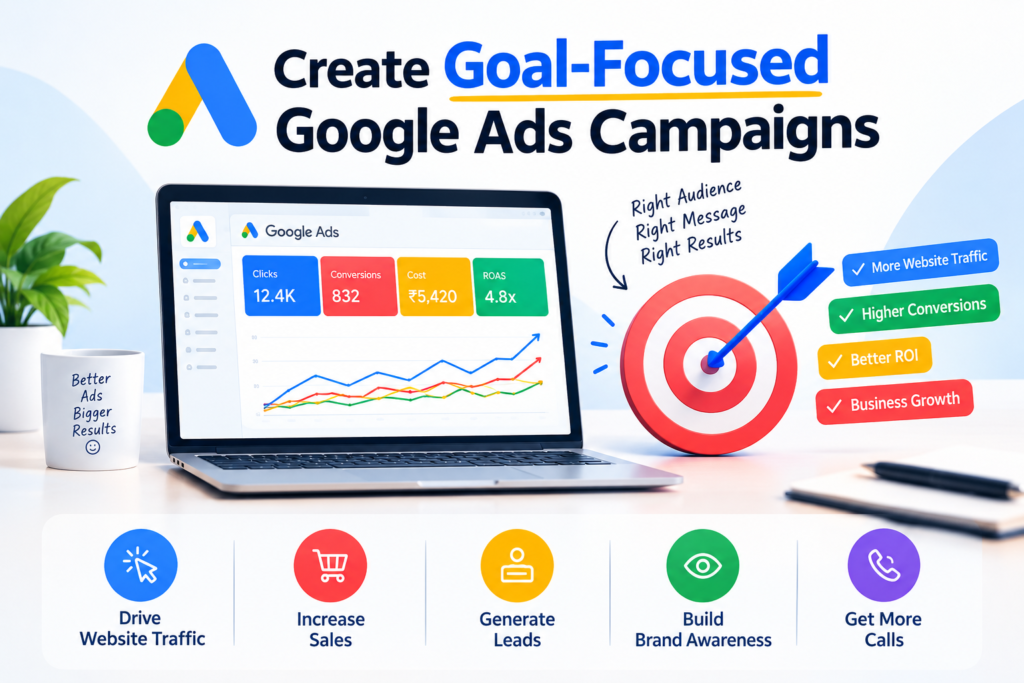
Depending on your business, your goal could be:
- Generating leads
- Increasing online sales
- Getting phone calls
- Receiving consultation requests
- Promoting a specific service
- Driving qualified website traffic
For businesses targeting users with existing demand, search ads can be particularly useful because they appear when people search for relevant terms.
However, getting clicks is only part of the process.
The more important question is: What happens after someone clicks?
If your ads receive traffic but visitors don’t take meaningful action, you need to investigate the complete journey—from keyword and ad copy to landing page and conversion process.
Google Ads Optimization: Turn Data Into Better Decisions
Google Ads optimization is an ongoing process. A campaign shouldn’t simply be launched and forgotten.
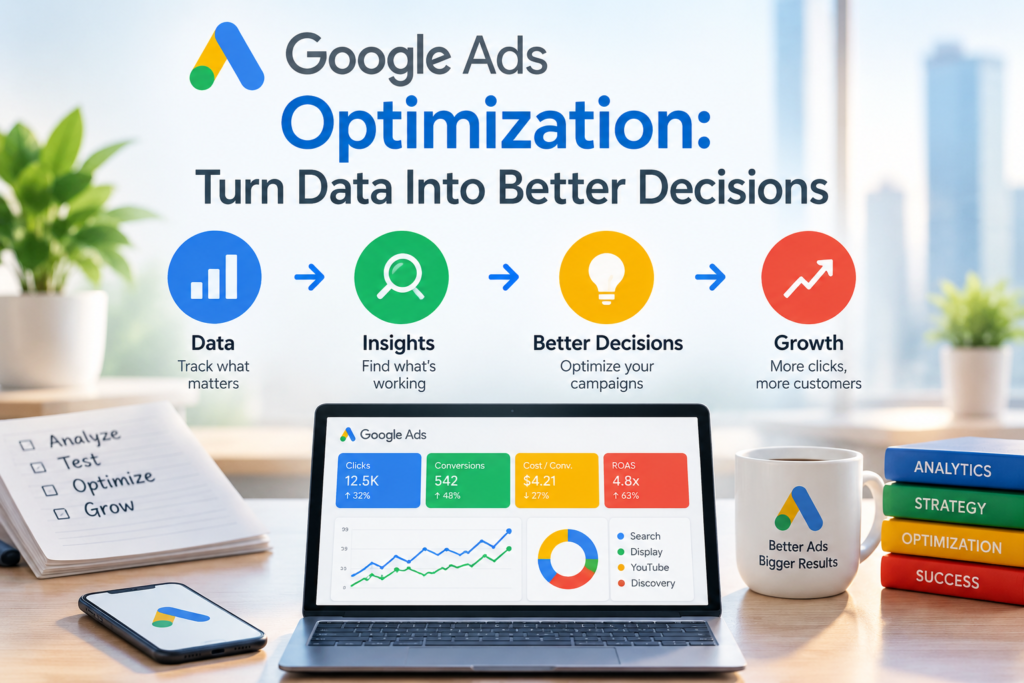
You can regularly review areas such as:
- Search terms and keywords
- Ad performance
- Conversion rates
- Cost per conversion
- Landing-page performance
- Audience behavior
- Budget allocation
- Underperforming campaigns
Instead of making random changes, use performance data to identify what needs improvement.
For example, if a keyword generates many clicks but very few leads, investigate whether the search intent matches your offer. The problem may not be the keyword alone—it could be the advertisement, landing page, pricing, or overall customer journey.
This analytical approach is more useful than optimizing campaigns based only on clicks.
Don’t Ignore Conversion Tracking
One of the biggest mistakes in digital advertising is focusing only on traffic.
Conversion tracking helps you understand whether advertising activity is producing meaningful business outcomes.
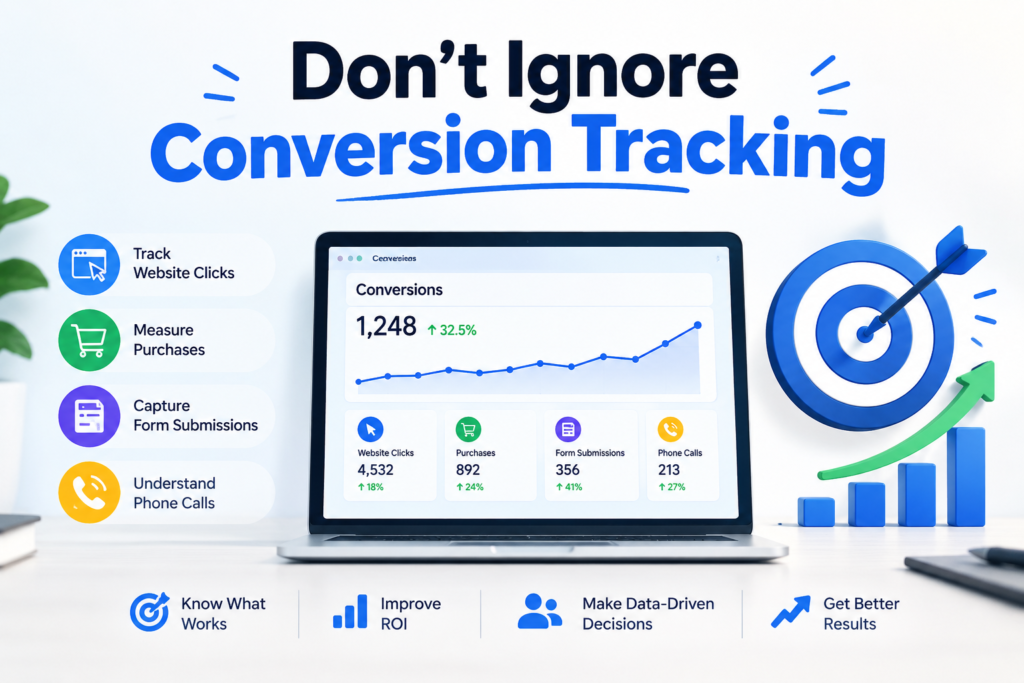
Depending on your website and goals, conversions could include:
- Form submissions
- Purchases
- Phone calls
- Consultation requests
- Sign-ups
- Other valuable actions
Without reliable tracking, it becomes difficult to determine which campaigns, ads, or keywords are actually contributing to your goals.
Your tracking setup should therefore be considered part of your advertising strategy—not something added at the end.
Use Facebook Advertising to Build Demand
Facebook advertising can complement Google Ads by reaching potential customers before they actively search for your business.
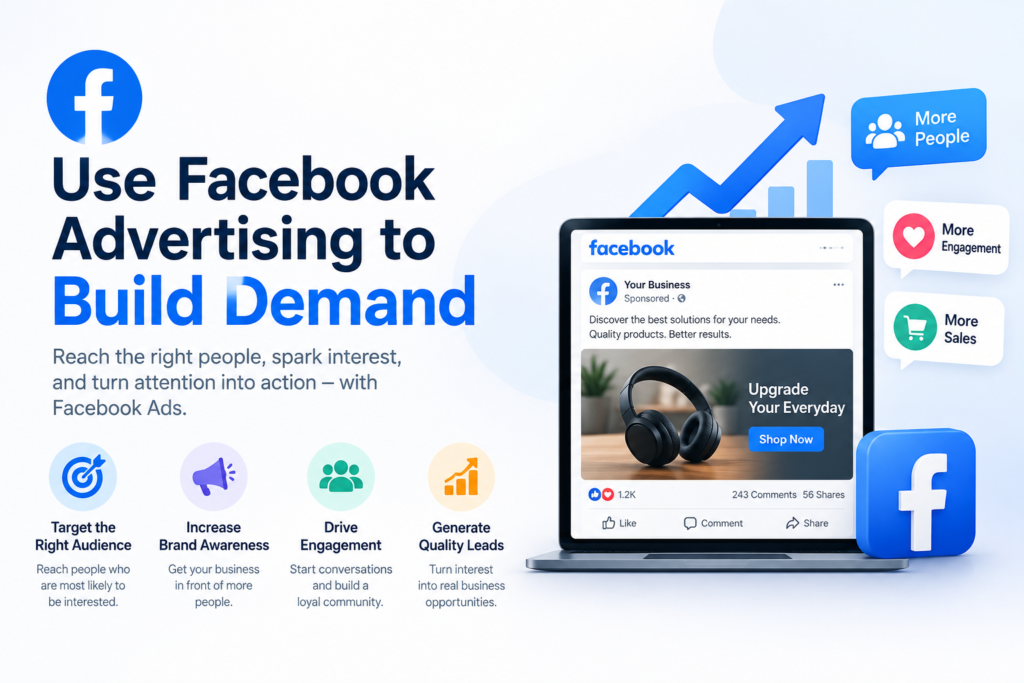
You can use social advertising for objectives such as:
- Building awareness
- Promoting content
- Introducing a service
- Retargeting website visitors
- Generating leads
- Supporting promotional campaigns
Creative quality matters here. Your images, videos, headlines, and messaging need to communicate the value of your offer quickly.
A useful approach is to test different creative angles rather than assuming one advertisement will work for everyone.
Connect Advertising With SEO and Content
Paid advertising shouldn’t operate separately from your organic marketing.
Your SEO research can help identify the topics, questions, and services your audience is interested in. That information can also influence your advertising strategy.
For example, if your website has useful content around website design, SEO, or digital marketing, those resources can support visitors who aren’t ready to purchase immediately.
Over time, you can create a system where:
SEO + Content + Facebook Ads + Google Ads + Website Optimization + Conversion Tracking
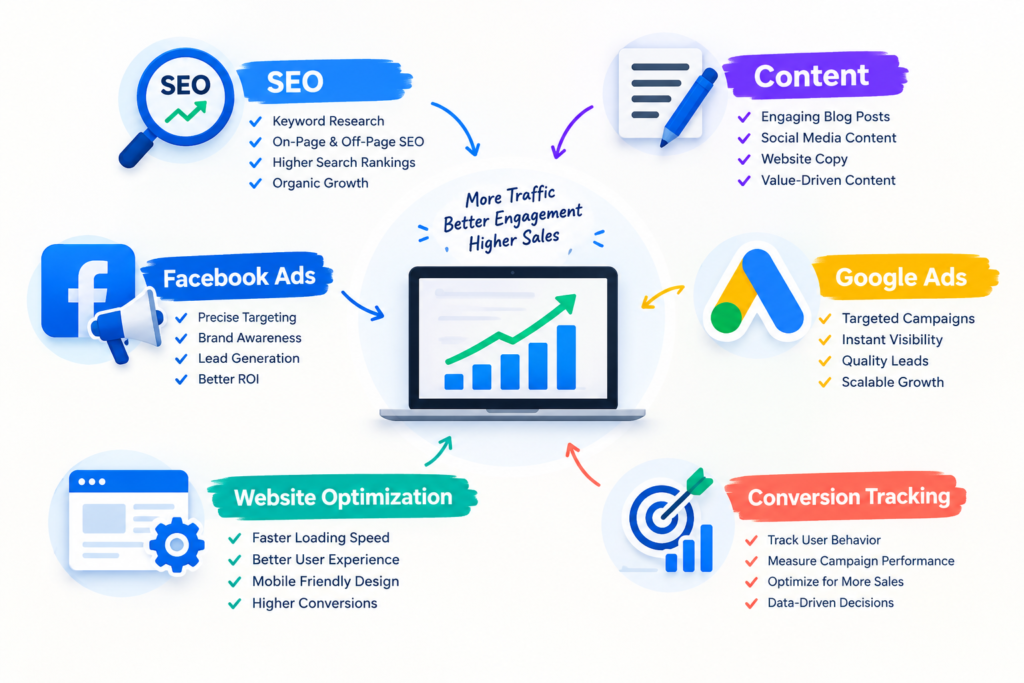
work together rather than functioning as isolated activities.
A Practical Optimization Process
If you’re starting from scratch, keep the process simple:
1. Define the business goal
Know exactly what you want advertising to accomplish.
2. Identify your target audience
Understand who needs your product or service and what problem you’re solving.
3. Build relevant landing pages
Match the landing page with the advertisement and user intent.
4. Launch controlled campaigns
Start with a focused structure instead of trying to advertise everything simultaneously.
5. Track meaningful conversions
Measure actions that contribute to your actual business goals.
6. Analyze performance
Look beyond clicks and impressions. Examine leads, sales, conversion rates, and costs.
7. Optimize continuously
Improve keywords, advertisements, targeting, landing pages, and budgets based on reliable data.
Final Thoughts
Growing a business online requires more than simply spending money on advertising. The strongest results come from creating a connected system where advertising brings the right visitors, your website gives them a clear reason to act, and tracking helps you understand what is working.
Facebook and Google advertising can play complementary roles in that system. Google can help capture existing search demand, while Facebook can help build awareness and reconnect with potential customers.
From practical work involving WordPress, Elementor, SEO research, landing pages, web design, and digital marketing, one principle remains important: don’t optimize advertising in isolation. Look at the complete customer journey.
When your website, advertising campaigns, content, and conversion tracking work together, you have a much stronger foundation for sustainable online growth.
FAQ
1. What is Facebook and Google advertising?
Facebook and Google advertising are paid digital marketing channels that allow businesses to reach potential customers through social platforms and Google’s advertising network. They can be used together to support awareness, traffic, lead generation, and sales.
2. Is Google Ads better than Facebook Ads?
Neither platform is automatically better. Google is particularly useful for reaching people who are actively searching, while Facebook can be effective for audience discovery, awareness, and remarketing. The right choice depends on your business objectives and audience.
3. Why is Google Ads optimization important?
Google Ads optimization helps improve campaign performance by analyzing data and making informed changes to keywords, ads, targeting, budgets, and landing pages.
4. Why do I need conversion tracking?
Conversion tracking helps identify whether your advertising is generating valuable actions such as leads, purchases, calls, or sign-ups. Without accurate tracking, it’s difficult to measure the real business impact of your campaigns.
5. Can small businesses use Facebook and Google advertising?
Yes. Small businesses can use both platforms, but campaigns should be built around clear goals and realistic budgets. Starting with focused campaigns and measuring results can help avoid unnecessary spending