
How to Build a High-Converting Digital Marketing Agency Website
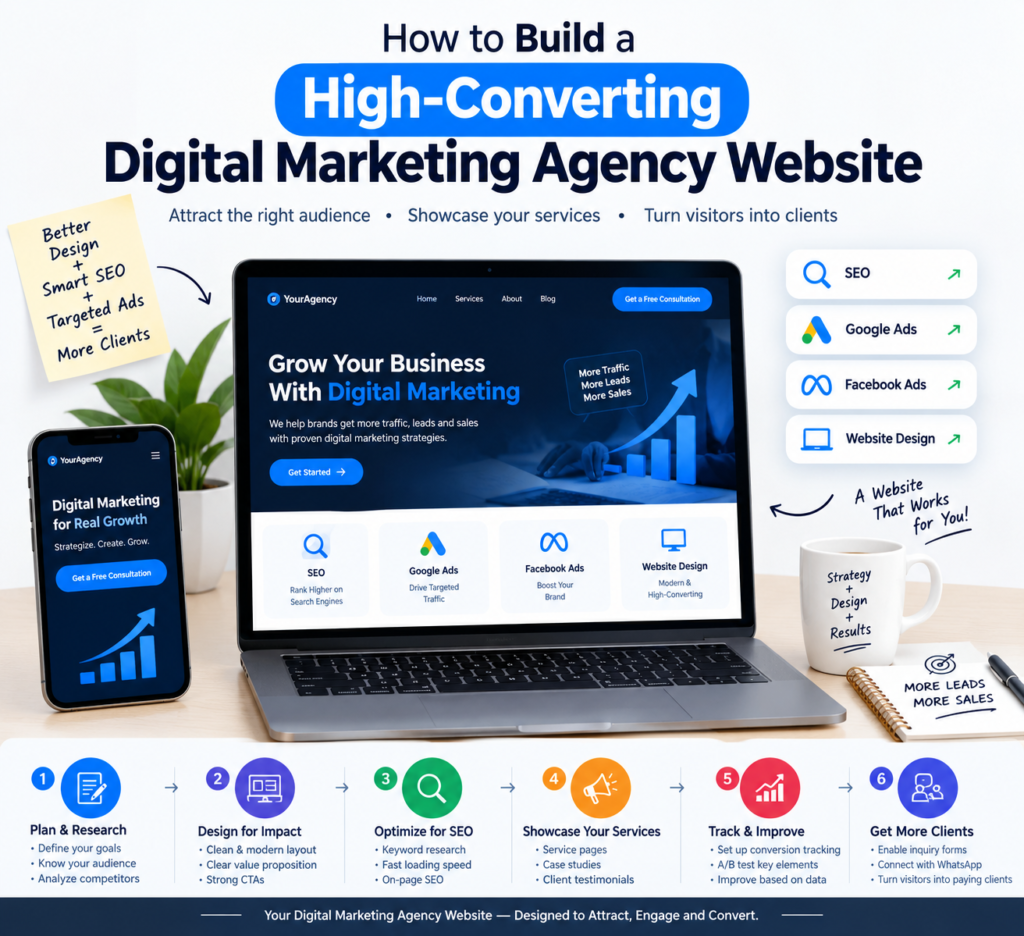
Discover the essential design, SEO, content, and conversion strategies that turn a digital marketing agency website into a powerful tool for attracting clients and growing your business.
Starting a digital marketing agency is exciting, but having good services isn’t enough. Potential clients will often judge your agency by its website before they ever contact you.
Your website needs to do more than look professional. It should explain what you offer, demonstrate why you’re credible, make it easy for visitors to take action, and create a strong foundation for organic search.
A well-planned digital marketing agency website can work like a 24/7 salesperson for your business.
1. Start With a Clear Website Strategy
Before choosing colors, animations, or WordPress themes, decide what your website needs to accomplish.
For a new agency, the primary objective should usually be turning relevant visitors into qualified inquiries
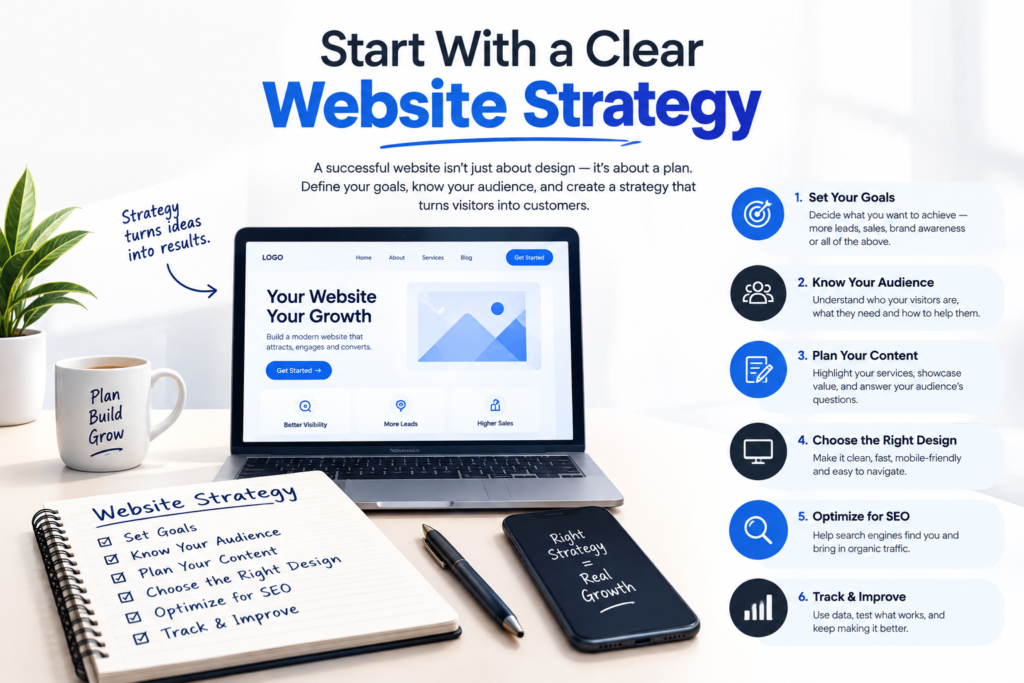
Ask yourself:
- Who are you trying to attract?
- What services do you provide?
- What problems do your services solve?
- Why should someone choose your agency?
- What action should visitors take?
For example, an agency offering SEO, Google Ads, Meta Ads, and website development should make these services immediately understandable.
Avoid trying to serve everyone. A clear target audience makes your messaging, content, SEO strategy, and website structure much stronger.
2. Build a Strong Homepage
Your homepage is often the first major interaction someone has with your brand.
The hero section should communicate three things quickly
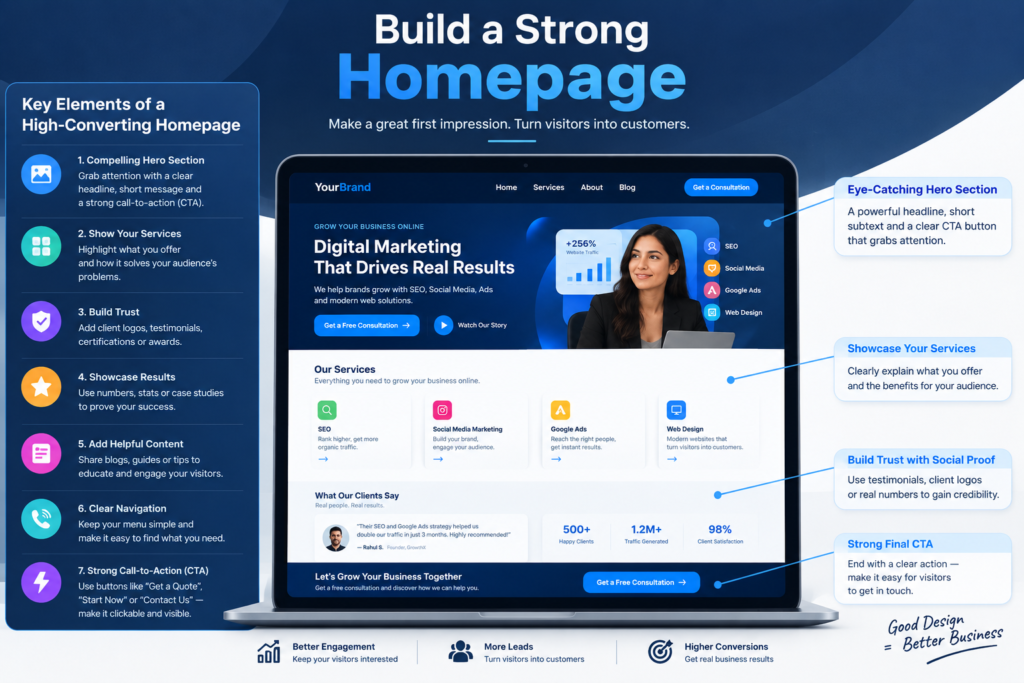
What you do + who you help + what the visitor should do next.
Instead of a vague headline such as “We Grow Businesses,” use specific messaging that explains your value.
For example:
Performance Marketing and Websites Built for Business Growth
Then support the headline with a short explanation and a clear CTA such as Get a Consultation or Start a Project.
Your homepage can include:
- Hero section
- Services
- Why choose your agency
- Your process
- Portfolio or relevant work
- Testimonials, when genuinely available
- FAQs
- Strong final CTA
The goal isn’t to add every possible section. It’s to guide visitors toward a decision.
3. Prioritize Professional Web Design and UX
Good web design isn’t simply about making a website attractive. It should make information easy to understand and actions easy to complete
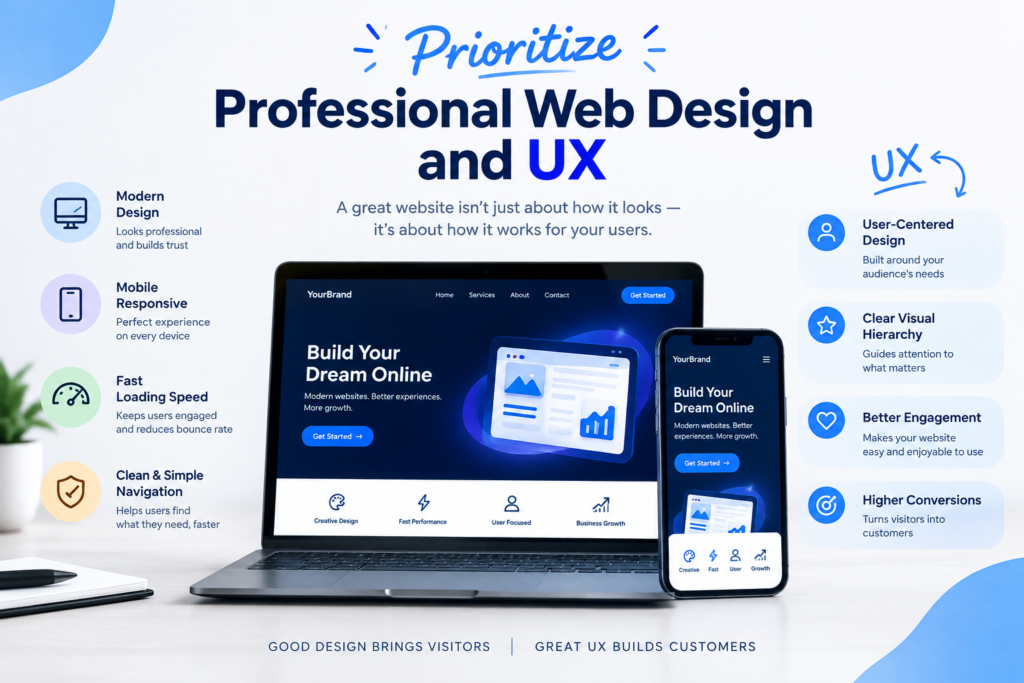
Pay attention to:
- Visual hierarchy
- Typography
- Spacing
- Button placement
- Navigation
- Readability
- Page structure
- Mobile usability
This is where UX design becomes important.
A visitor shouldn’t have to search through multiple pages to understand what your agency does. Your navigation should be simple, and important information should be easy to find.
A clean design can also make your agency appear more organized and professional.
4. Make the Website Responsive
A modern agency website needs effective responsive web design.
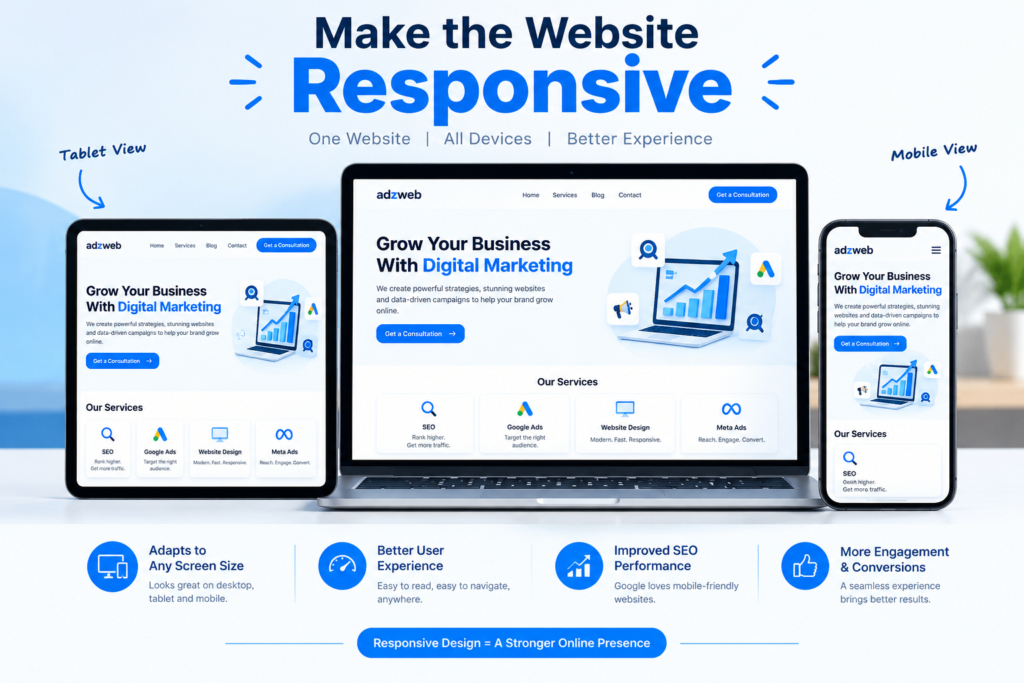
Your website should work comfortably across:
- Smartphones
- Tablets
- Laptops
- Desktop monitors
Don’t simply shrink the desktop version for mobile. Check how headings, images, forms, menus, buttons, and spacing actually behave on smaller screens.
Pay particular attention to contact and inquiry forms. If completing a form on a smartphone is frustrating, you may lose potential leads.
5. Create Service Pages That Target Real Searches
One of the biggest mistakes new agencies make is putting every service onto one page.
Instead, create dedicated service pages when each service deserves its own explanation
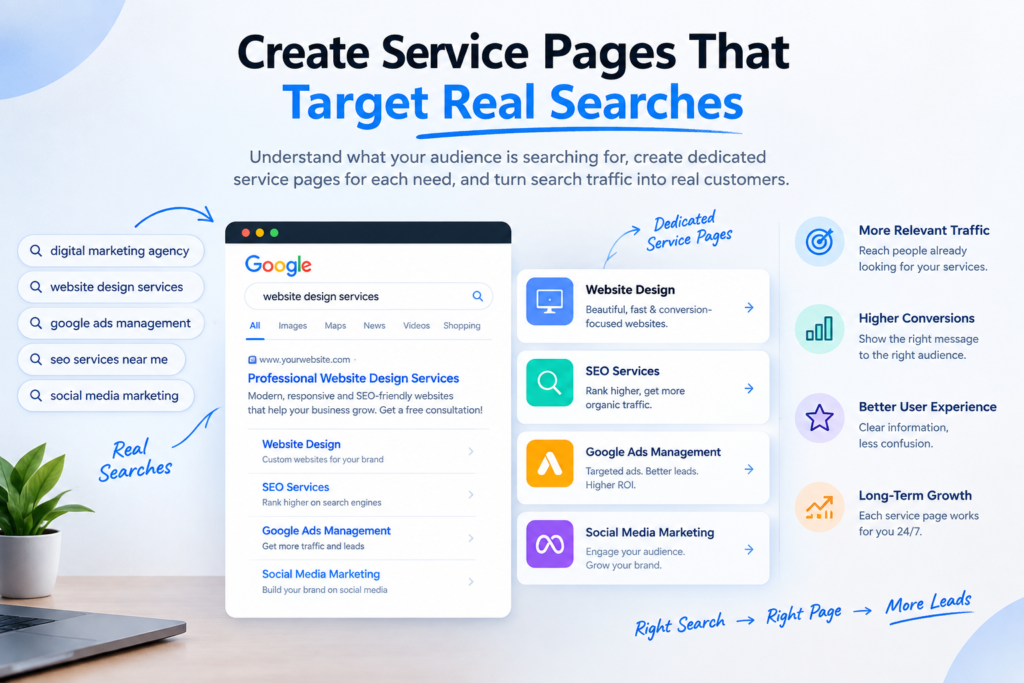
For example:
- SEO Services
- Google Ads Management
- Meta Ads Management
- Website Design & Development
Each page should explain:
- What the service is
- Who it’s for
- The problems it solves
- Your approach
- What the client can expect
- Frequently asked questions
- How to get started
This also creates more opportunities to target relevant search queries.
6. Build SEO Into the Website From the Beginning
SEO shouldn’t be something you add after finishing your website.
Start with keyword research and build your website structure around relevant topics.
For a digital marketing agency, related searches may include terms around SEO services, advertising management, website design, landing pages, and digital marketing solutions.
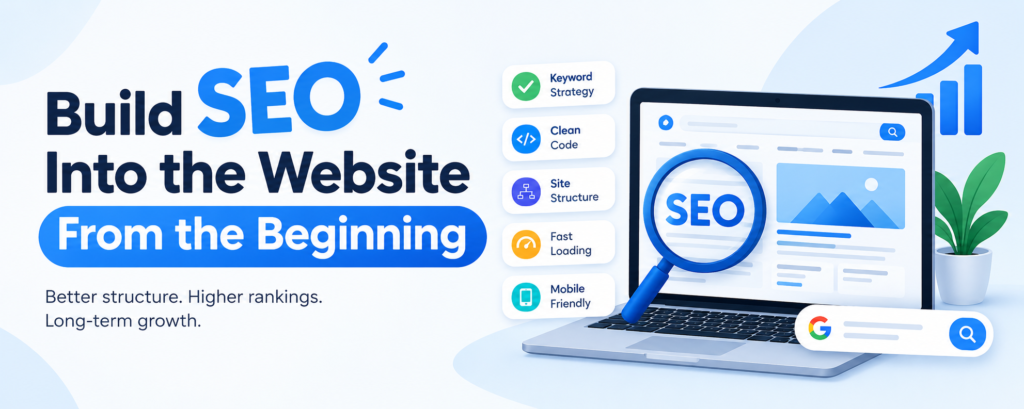
Use keywords naturally in:
- Page titles
- Headings
- URLs
- Body content
- Image alt text where appropriate
- Internal links
- Meta descriptions
However, don’t force keywords into every sentence.
Search optimization works best when the content genuinely answers what users are looking for.
7. Use Content to Demonstrate Expertise
Your blog shouldn’t exist only because you heard that “every website needs a blog.”
Create content that answers questions your potential clients actually have.

For example:
- How Does Google Ads Work for Small Businesses?
- SEO vs Google Ads: Which Is Better?
- How to Create a High-Converting Landing Page
- How Much Does Website Development Cost?
- Common SEO Mistakes Businesses Should Avoid
This type of content can attract people earlier in the buying journey.
It also gives you an opportunity to demonstrate your knowledge of SEO, performance marketing, web design, UX, and conversion optimization.
8. Add Conversion-Focused CTAs
Getting website traffic is only part of the job.
Your digital marketing agency website should make the next step obvious.
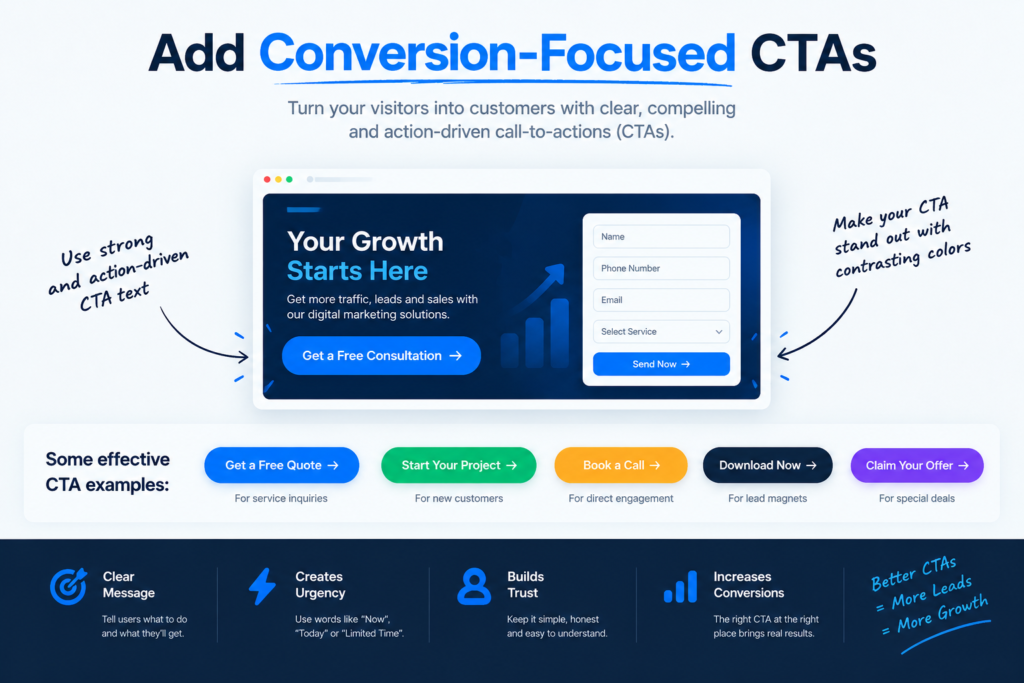
Useful CTAs include:
- Get a Consultation
- Request a Quote
- Start Your Project
- Discuss Your Business
- Get a Free Strategy Call
Place relevant CTAs throughout the website rather than relying on one button at the bottom.
For lead-generation websites, an inquiry form can collect useful information such as:
- Name
- Phone number
- Required service
- Approximate budget
- Project requirements
Keep forms as simple as possible while collecting information that genuinely helps qualify leads.
9. Optimize Website Performance
Website optimization includes more than SEO.
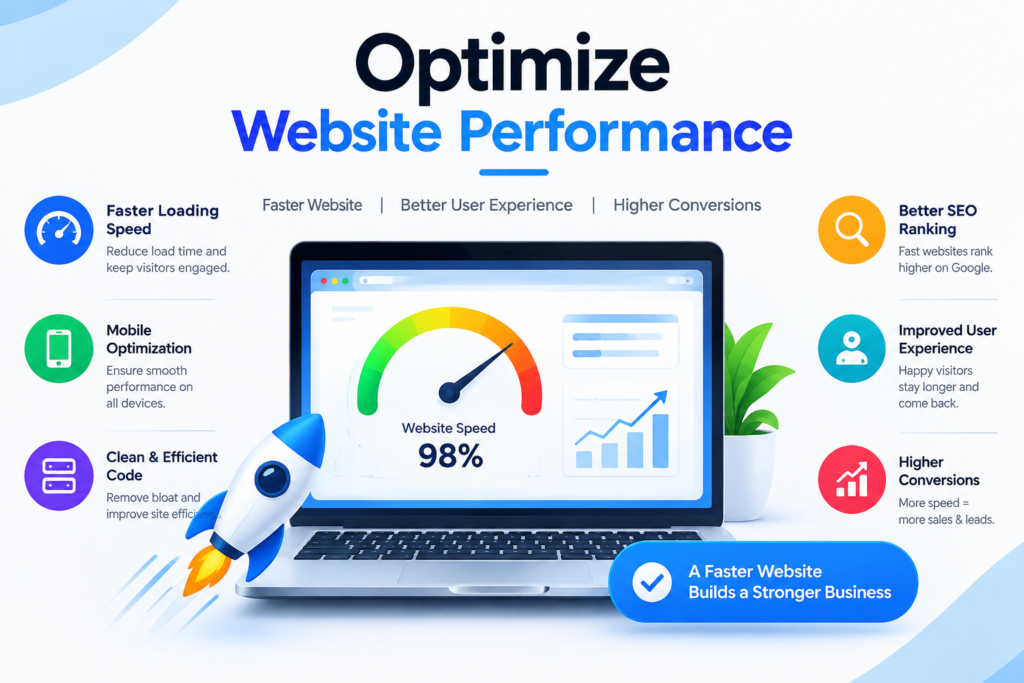
You should also consider technical and user-experience factors such as:
- Page loading performance
- Image optimization
- Mobile usability
- Clean navigation
- Proper heading structure
- Functional forms
- Broken-link checks
- Secure website configuration
If you’re building with WordPress and Elementor, pay particular attention to unnecessary plugins, oversized images, excessive animations, and poorly optimized assets.
A visually impressive website isn’t useful if it becomes difficult or slow to use.
10. Build Trust Without Making False Claims
A new agency doesn’t need to pretend it has worked with hundreds of companies.

Trust can be built through transparency.
Show visitors:
- Your services
- Your process
- Relevant work
- Portfolio projects
- Genuine certifications
- Published content
- Real results when you have documented them
If you don’t have case studies yet, don’t manufacture them. Instead, demonstrate your thinking through useful content, sample projects, practical explanations, and a clear process.
This approach is especially important when establishing E-E-A-T signals around experience, expertise, authoritativeness, and trust.
11. Keep Improving After Launch
Launching the website isn’t the finish line.
Use your SEO research, analytics, conversion data, and user feedback to identify opportunities for improvement.

Test elements such as:
- Headlines
- CTA wording
- Forms
- Landing pages
- Service-page content
- Internal links
- Navigation
A high-converting website is usually the result of continuous website optimization, not a one-time design project.
Conclusion
Building a successful digital marketing agency website requires more than attractive visuals.
You need a combination of strategic web design, website development, SEO, responsive design, UX, useful content, and conversion optimization.
For someone starting a marketing agency, the best approach is to build a website around the customer’s journey: understand their problem, explain your solution clearly, establish trust, and make taking the next step simple.
Your website doesn’t have to be complicated. It needs to be clear, useful, credible, searchable, and focused on action.
FAQ
What should a digital marketing agency website include?
A strong agency website should generally include a clear homepage, dedicated service pages, an about section, portfolio or work examples, useful content, FAQs, contact information, and clear calls to action.
Is SEO important for a digital marketing agency website?
Yes. SEO can help your website become discoverable for relevant searches. Keyword research, useful content, technical optimization, internal linking, and well-structured pages can all contribute to a stronger organic search strategy.
Should a new digital marketing agency have a blog?
A blog can be valuable when it provides genuinely useful information for your target audience. Focus on answering relevant questions rather than publishing content simply to increase the number of pages.
What makes an agency website high-converting?
Clear messaging, strong UX, relevant services, trust signals, responsive design, fast and usable pages, compelling CTAs, and simple inquiry forms can all contribute to a better conversion experience.
Can WordPress be used to build a digital marketing agency website?
Yes. WordPress can be used to create agency websites, service pages, landing pages, blogs, and lead-generation experiences. Page builders such as Elementor can also provide flexibility when designing and managing pages.
How often should an agency website be optimized?
Website optimization should be an ongoing process. Review performance, SEO opportunities, content, user experience, and conversion paths periodically and make improvements based on real evidence rather than assumptions.