
How Google Ads Matters for Website Traffic and How It Works
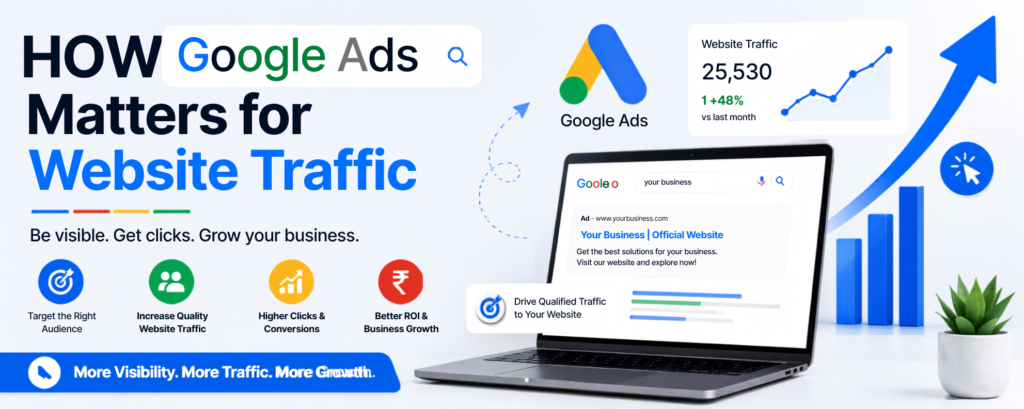
For a D2C business, getting people to visit your website is only the first step. The bigger challenge is attracting people who are actually interested in what you sell. This is where Google Ads can become useful.
Unlike waiting for organic rankings to develop, paid search can place your business in front of people actively searching for relevant products or services. Google explains that keywords can connect ads with searches related to the advertiser’s products or services.
But simply creating an advertisement does not guarantee profitable traffic. Your campaign structure, keywords, ad relevance, landing page and conversion tracking all matter.
Why Google Ads Matters for Website Traffic
The main advantage of Google Ads is intent.
Imagine a customer searches for “buy running shoes online.” That person has already expressed an interest in purchasing. A relevant search ad can give your business an opportunity to bring that visitor directly to your website
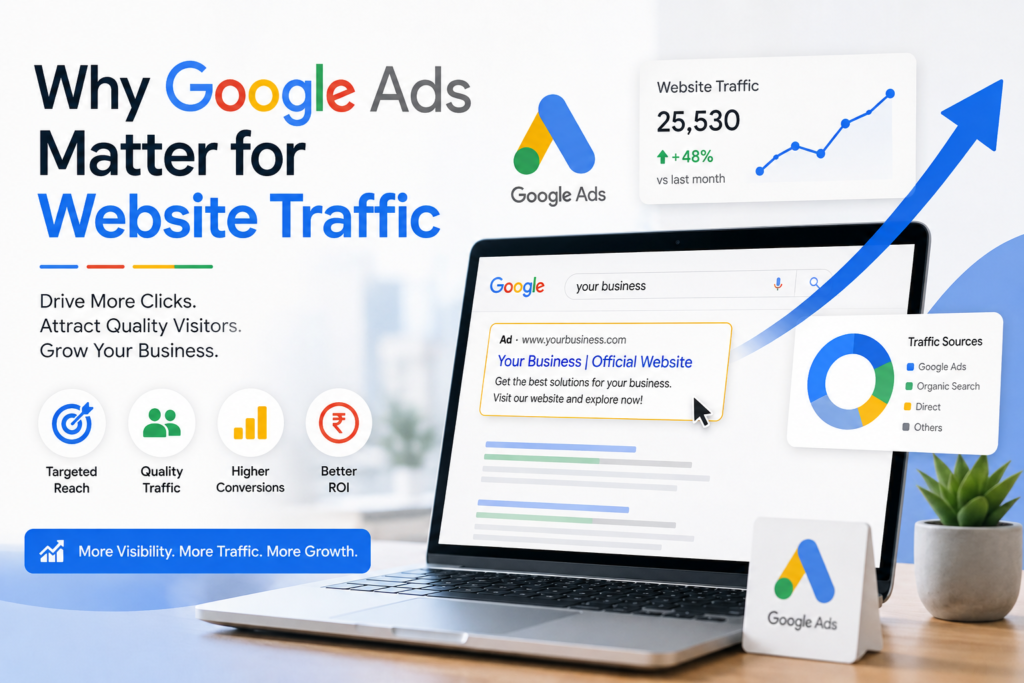
For D2C businesses, this can help generate:
- Product-page visits
- New leads
- Online purchases
- Brand discovery
- Remarketing opportunities
- Data for future marketing decisions
Google also provides bidding options designed around different goals. If your objective is website traffic, focusing on clicks can be an appropriate starting point; if your objective is measurable business actions, conversion-focused bidding may be more suitable.
However, traffic alone isn’t the final objective. A thousand irrelevant visitors may be less valuable than a smaller number of highly interested shoppers.
How Google Ads Works
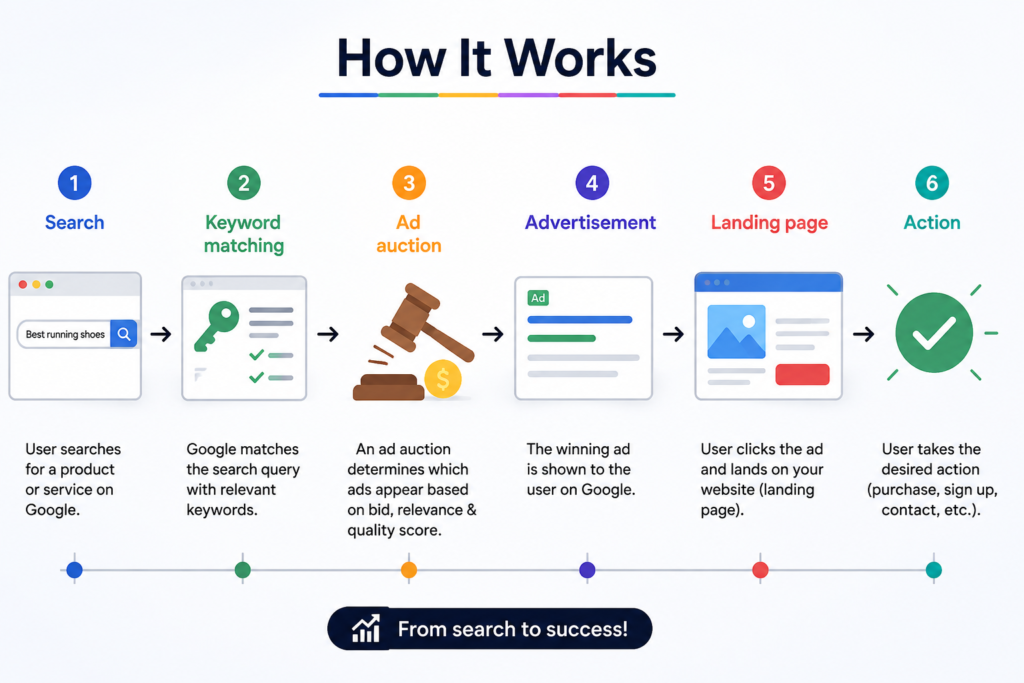
At a basic level, the process looks like this:
Search → Keyword matching → Ad auction → Advertisement → Landing page → Action
When someone searches Google, its advertising system identifies potentially relevant ads and evaluates their eligibility. Eligible ads then compete in an auction.
Google says Ad Rank helps determine whether an advertisement can appear and where it may appear. Factors include the bid, ad quality, landing-page experience, competition, search context and other elements.
This means the advertiser with the biggest budget doesn’t automatically win every auction. Relevance and quality can also influence performance.
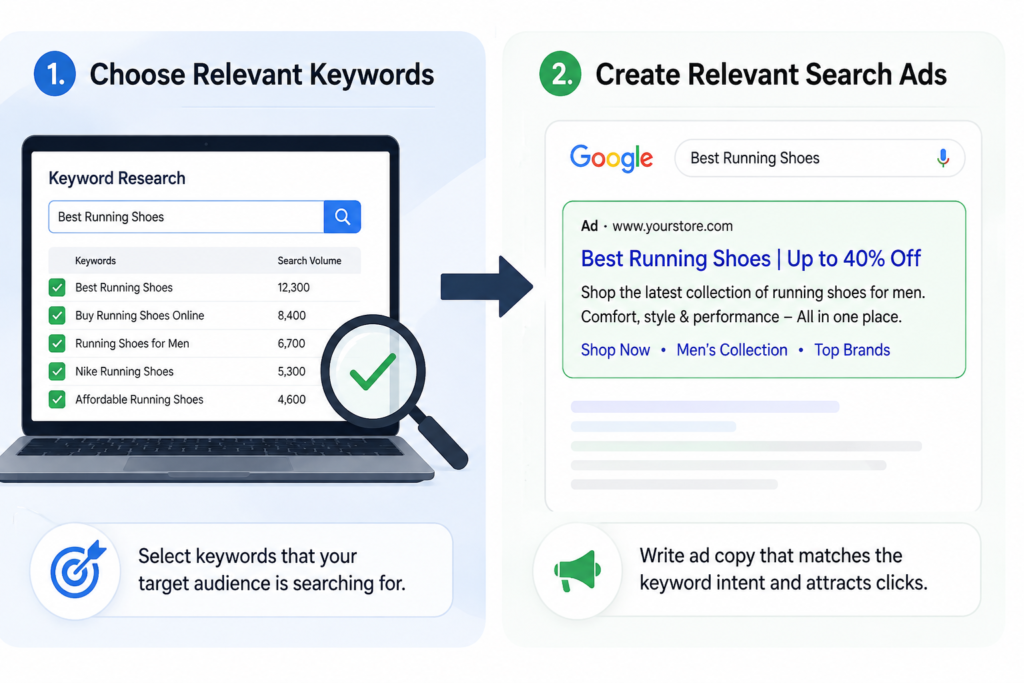
1. Choose Relevant Keywords
Keywords are the connection between your potential customer and your advertisement.
For example, a D2C skincare brand might research terms related to:
- Buy face serum
- Vitamin C serum
- Best serum for skincare
- Organic skincare products
Modern Google Ads matching can consider the meaning and context of searches rather than relying only on identical wording.
Good keyword research therefore requires understanding what your customers actually search for and what those searches indicate about buying intent.
2. Create Relevant Search Ads
Your advertisement should match the customer’s intent.
If someone searches for a specific product, sending them to a generic homepage can create unnecessary friction. A more relevant product or category landing page may provide a better experience.
Google considers the usefulness and relevance of both advertisements and landing pages when determining ad quality.
3. Send Visitors to a Strong Landing Page
Getting the click is not enough.
Your landing page should make it easy for visitors to understand:
- What you’re offering
- Why it is useful
- What makes your product different
- What action they should take next
From practical website and landing-page work, this is an important connection between paid marketing and web design. Even a well-targeted campaign can struggle when the destination page is confusing, slow or poorly aligned with the advertisement.
Google Ads Campaigns and Website Growth
A well-structured campaign gives you more control over where your advertising budget goes.
For example, a D2C business could separate campaigns according to product categories or customer intent. This makes it easier to compare search terms, advertisements and landing-page performance.
You can then use Google Ads optimization to improve the campaign based on actual performance rather than assumptions.
Look at metrics such as:
- Clicks
- Click-through rate
- Cost per click
- Conversions
- Conversion rate
- Cost per conversion
The most important metric depends on your business objective
Why Conversion Tracking Is Essential
Website traffic becomes much more useful when you know what visitors do after clicking.
Google’s conversion tracking can measure actions such as purchases, leads, calls, sign-ups and downloads.
For a D2C store, this might mean tracking completed purchases rather than simply counting visitors.
This helps answer a more valuable question:
“Which advertising activity is contributing to business results?”
Without conversion tracking, you may optimize for clicks while having limited visibility into whether those visitors actually generate revenue.
Google Ads vs. Organic Traffic
Google Ads and SEO serve different purposes.
| Google Ads | SEO |
|---|---|
| Paid visibility | Organic visibility |
| Can generate traffic without waiting for rankings | Usually requires time to build rankings |
| Campaign budget is required | Content and optimization require investment |
| Strong control over targeting and campaigns | Strong long-term search potential |
| Performance can be measured through advertising data | Performance depends heavily on organic search visibility |
For many D2C businesses, the two strategies don’t need to compete. Paid marketing can generate immediate traffic and useful data while SEO builds longer-term organic visibility.
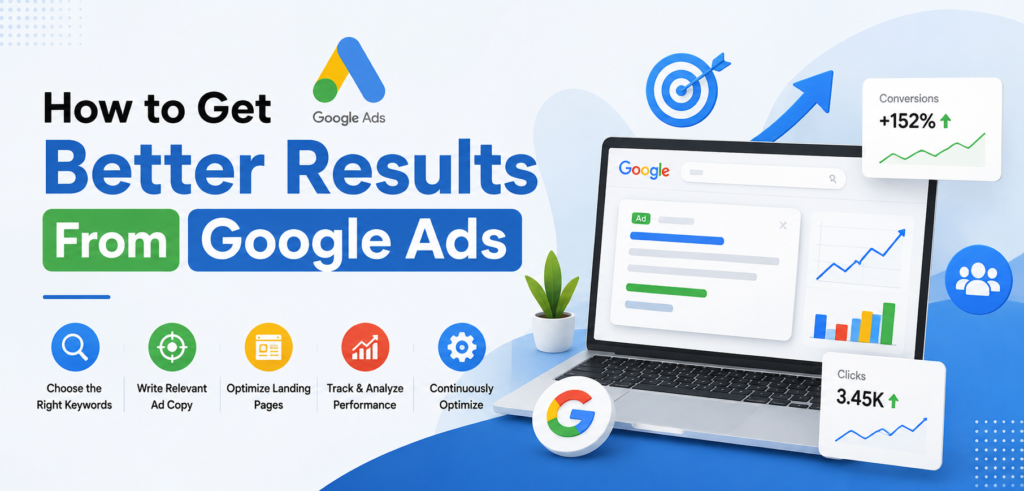
How to Get Better Results From Google Ads
Start with the fundamentals:
- Research high-intent search terms.
- Match advertisements closely with search intent.
- Build relevant landing pages.
- Track meaningful conversions.
- Review search and campaign performance regularly.
- Optimize based on actual data.
- Avoid judging success only by traffic volume.
The goal isn’t simply to buy more clicks. It is to attract the right visitors and move them toward meaningful actions.
Conclusion
Google Ads can be an effective way for D2C businesses to bring targeted visitors to their websites. Its value comes from connecting advertising with customer intent, relevant landing pages and measurable outcomes.
The strongest approach is not simply launching campaigns and increasing the budget. It involves researching keywords, creating relevant search ads, improving landing-page experience and using conversion tracking to understand what actually works.
When paid marketing, SEO, website design and conversion optimization work together, website traffic becomes more than a number—it can become a measurable part of business growth
FAQ
Is Google Ads good for website traffic?
Yes. Google Ads can help businesses generate targeted website visits, particularly when campaigns focus on relevant searches and appropriate bidding goals.
How does Google Ads increase website traffic?
It can display advertisements when users conduct relevant searches, allowing businesses to attract clicks to selected website pages.
Is Google Ads better than SEO?
Neither is universally better. Google Ads provides paid visibility, while SEO focuses on organic search visibility. Using both can support different stages of a broader search strategy.
Why is conversion tracking important in Google Ads?
Conversion tracking helps connect ad interactions with valuable actions such as purchases, leads or sign-ups, allowing businesses to evaluate campaign performance more effectively.
What is the most important part of a Google Ads campaign?
There isn’t one universal factor. Keyword relevance, ad quality, landing-page experience, bidding, targeting and conversion measurement all contribute to campaign performance